This maono wireless microphone review looks at the MAONO DGM20W, a gaming and streaming mic that combines 2.4G wireless and USB wired connections with adjustable noise reduction.
Its dual connection options and included boom arm suit creators who want a tidier, adaptable desk setup.
MAONO DGM20W Review Summary
The quick verdict
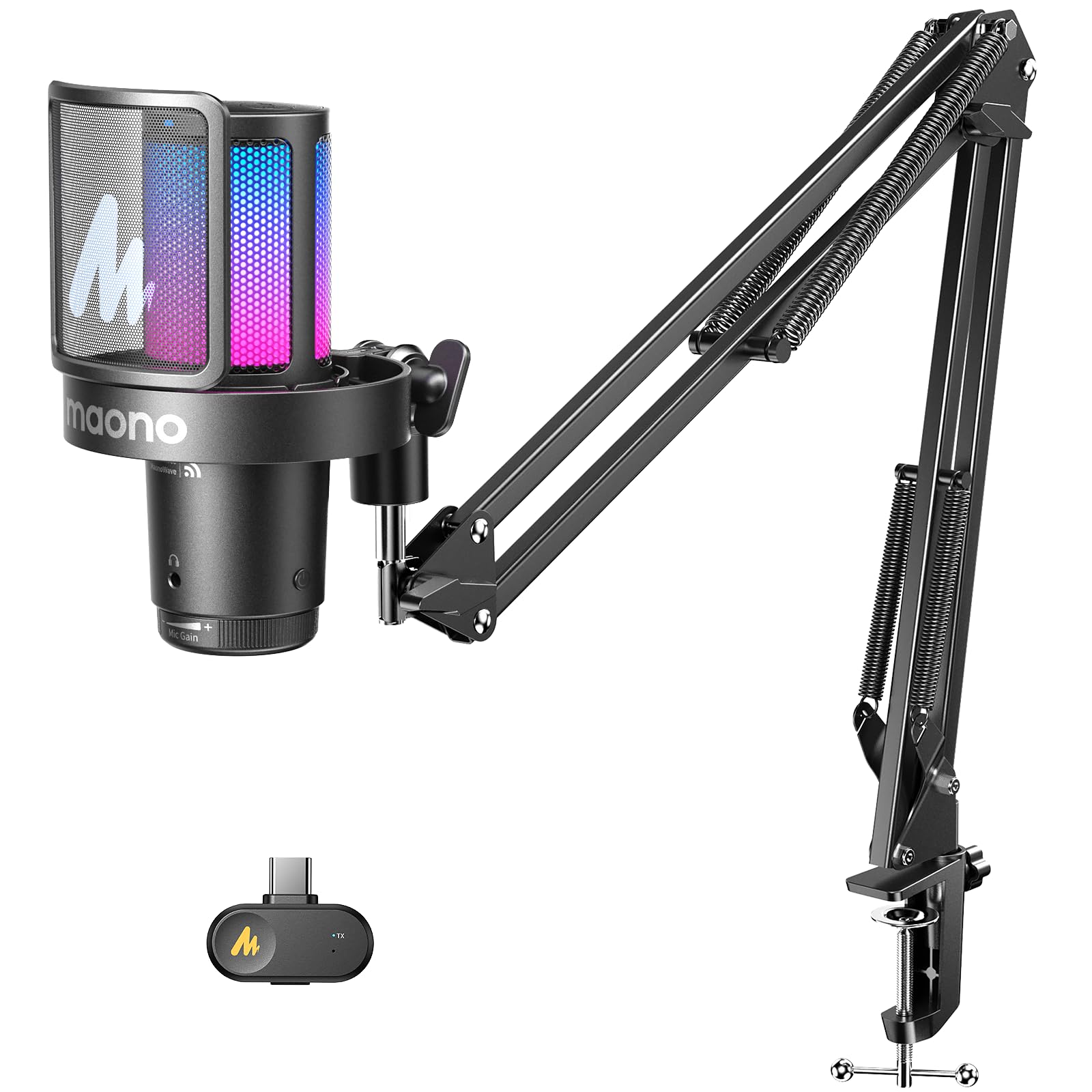
6,000+ ratings
Read Amazon ReviewsMAONO DGM20W
A flexible choice for PC and phone users who want wireless gaming audio, adjustable noise reduction, and a boom arm in one desktop microphone.
- Dual connectivity: 2.4G wireless or USB wired operation, with an included USB-C receiver and USB adapter cable.
- Compatibility includes computers, laptops, iPhone, Android phones, and PS5; a Lightning receiver is not included, and Xbox is not supported.
- 24-bit, 48 kHz sampling, a cardioid polar pattern, and an 80 dB signal-to-noise ratio are listed for voice capture.
- Touch noise reduction offers three intensity levels through MaonoLink software, with reduction depth up to -28 dB.

Pros
- Wireless and wired modes give users a choice between a less cluttered desk and a direct USB connection.
- Noise reduction has three software-adjustable levels, allowing users to choose a setting for their environment.
Consider before buying
- The up-to-40-hour battery figure is specified with RGB off, so buyers who prefer lighting should expect a different runtime.
- iPhone users who need a Lightning connection must supply a compatible receiver or connection solution, since one is not included.
Read the full review summary
The DGM20W brings together wireless and wired use, a cardioid pickup pattern, touch controls, RGB lighting, and headphone monitoring.
Its headline practical advantage is flexibility: it can connect to computers, phones, and PS5, while the boom arm lets you position the mic near your voice or move it aside when you need desk space.
It is aimed at gamers, streamers, podcasters, and meeting participants who want onboard controls and do not want a permanently tethered mic. The up-to-40-hour battery figure applies with RGB off, and the product also offers software-adjustable noise reduction.
Check your device’s port and connection requirements before buying, especially for iPhone use, since a Lightning receiver is not included.
The buying factors
MAONO DGM20W Scorecard
Editorial scores reflect listed features and buyer fit; they are not laboratory measurements or customer ratings.
Connection flexibility
Offers 2.4G wireless and USB wired modes, with a USB-C receiver and adapter cable for different interfaces.
Noise control options
Combines a cardioid pattern and touch noise reduction with three adjustable software levels.
On-mic controls
Touch mute, noise reduction, RGB control, and a gain knob keep common adjustments close at hand.
Monitoring and adjustment
A headphone jack supports real-time monitoring, while the gain knob helps adjust input sensitivity.
Setup versatility
The boom arm supports positioning flexibility, and the mic is designed to work with several device types.
Portable use
Wireless operation and a rechargeable battery enable untethered sessions, though actual runtime varies with RGB use.
Key Features and Specifications of MAONO DGM20W
- Dual connectivity: 2.4G wireless or USB wired operation, with an included USB-C receiver and USB adapter cable.
- Compatibility includes computers, laptops, iPhone, Android phones, and PS5; a Lightning receiver is not included, and Xbox is not supported.
- 24-bit, 48 kHz sampling, a cardioid polar pattern, and an 80 dB signal-to-noise ratio are listed for voice capture.
- Touch noise reduction offers three intensity levels through MaonoLink software, with reduction depth up to -28 dB.
- RGB lighting has onboard color switching and shutoff controls, with additional effects and brightness adjustment in MaonoLink.
- Touch mute is indicated by a red LED while the RGB lighting turns off; the mic also has a gain knob and headphone monitoring jack.
- A rechargeable battery is rated for up to 40 hours with RGB off, and the package includes a flexible boom arm.
Pros and Cons of MAONO DGM20W
Pros
- Wireless and wired modes give users a choice between a less cluttered desk and a direct USB connection.
- Noise reduction has three software-adjustable levels, allowing users to choose a setting for their environment.
- Touch mute, gain control, and headphone monitoring make routine audio adjustments accessible on the microphone.
- The boom arm offers more positioning flexibility than a fixed desktop placement.
Consider before buying
- The up-to-40-hour battery figure is specified with RGB off, so buyers who prefer lighting should expect a different runtime.
- iPhone users who need a Lightning connection must supply a compatible receiver or connection solution, since one is not included.
- Software-based noise reduction customization depends on using MaonoLink; confirm that its available controls fit your intended device and setup.
Who Should Buy MAONO DGM20W?
Good fit
Consider the DGM20W if you switch between a gaming PC, phone, or PS5 and value having both wireless and wired connection options.
The included receiver and adapter cable are intended to accommodate different interfaces, and the boom arm helps bring the mic into a useful speaking position without fixing it to one spot on the desk.
Its controls suit people who make frequent changes while gaming or recording. You can tap to mute, turn the gain knob, monitor through headphones, and adjust noise reduction intensity in MaonoLink.
The RGB options add a visual customization layer, while the ability to turn lighting off aligns with the stated maximum battery runtime.
For phone use, verify the connection path before purchase. Android compatibility is listed, while iPhone use is noted alongside the caveat that a Lightning receiver is not included; the product also explicitly excludes Xbox.
Who should skip it
Skip it if you need Xbox compatibility or require a Lightning receiver to be included for a direct iPhone connection.
Look elsewhere if your setup requires a microphone designed specifically for wired studio recording or a battery runtime guaranteed while RGB lighting is active; those needs are not addressed by the listed design.
How the MAONO DGM20W Fits a Wireless Gaming Setup
Wireless freedom with a wired fallback
The DGM20W’s two connection modes let buyers choose between a 2.4G link and USB wiring.
Wireless operation can reduce cable clutter around a gaming desk, while wired mode offers another way to connect when that better suits a session.
The included USB-C receiver and adapter cable are intended to cover different device interfaces, but buyers should still check the ports on their specific device.
Noise reduction is adjustable
A cardioid pattern focuses pickup toward the mic’s front, and touch control provides a quick noise reduction option. For more control, MaonoLink offers three intensity levels, with a maximum reduction depth of up to -28 dB.
That range makes the mic adaptable to different room conditions, though the practical result depends on the surrounding sound and chosen setting.
Controls support live adjustments
Touch mute, the gain knob, and headphone monitoring are useful when you need to respond quickly without navigating software. The red LED and disabled RGB lighting indicate mute status, giving the mic a visible state change.
Real-time headphone monitoring can help you listen to your voice while adjusting input sensitivity.
Battery claims depend on lighting
The rechargeable battery is rated for up to 40 hours when RGB is off. That gives a helpful reference for untethered use, but the figure is not specified for sessions with lighting enabled.
Buyers planning long wireless sessions can turn the lighting off when battery life matters more than the visual effect.
Alternatives to MAONO DGM20W
Vocal Condenser Microphones alternative
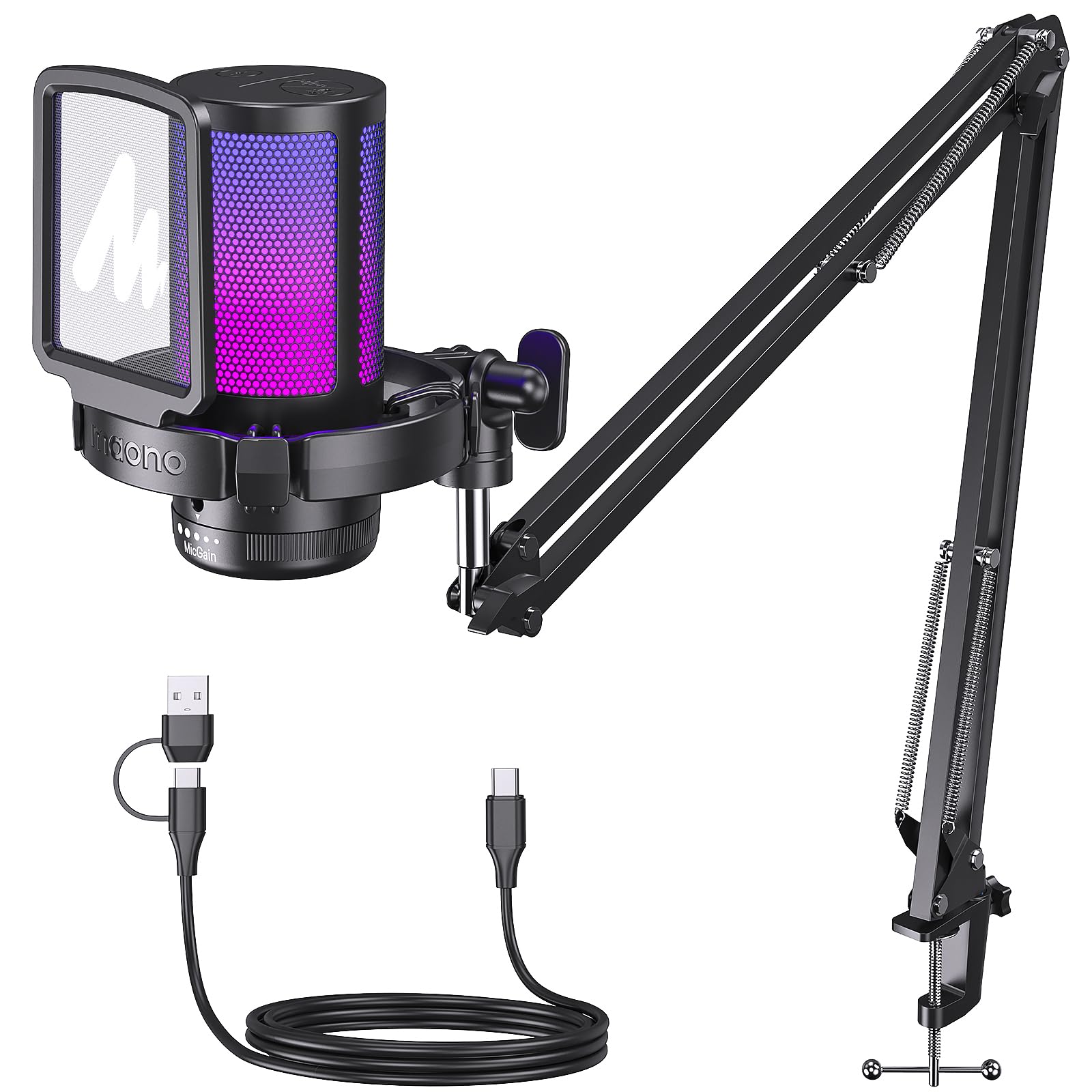
6,000+ ratings
Read Amazon ReviewsMAONO DGM20S USB Gaming Microphone
Choose the DGM20W if wireless operation and a battery-powered option matter to your setup. Consider the DGM20S if a wired USB connection and its listed boom-arm accessories better match your desk and recording routine.
- The DGM20S uses USB connectivity and includes a metal boom arm, shock mount, and pop filter.
- It has a cardioid pattern, one-click noise cancellation, gain control, RGB modes, and zero-latency monitoring.
- The DGM20W offers both 2.4G wireless and USB wired operation, plus a rechargeable battery rated for up to 40 hours with RGB off.
Vocal Condenser Microphones alternative
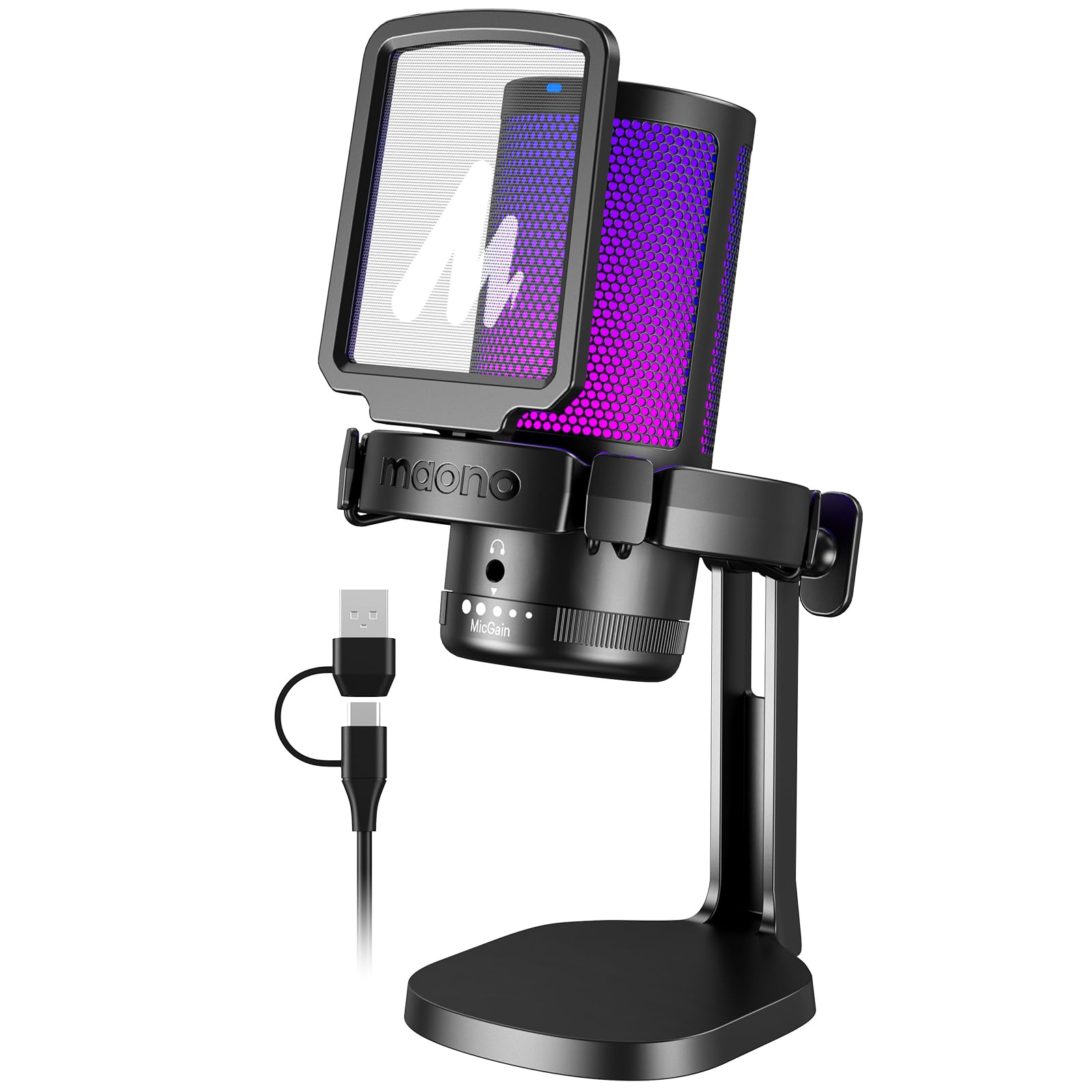
1,000+ ratings
Read Amazon ReviewsMAONO DGM20 USB Gaming Microphone
The DGM20W is the more suitable fit when you want a wireless mode and rechargeable operation. The DGM20 may fit buyers who are comfortable with USB wiring and want adjustable noise cancellation through Windows software.
- The DGM20 is a wired USB microphone with a cardioid pattern, RGB modes, mute and gain controls, and a headphone monitoring jack.
- Its noise cancellation software offers adjustable control on Windows.
- The DGM20W supports wireless and wired use and provides three software-adjustable noise reduction levels.
Is MAONO DGM20W Worth It?
The MAONO DGM20W is worth considering if you want a gaming mic that can move between wireless and wired use, with onboard controls, monitoring, and an included boom arm.
Its noise reduction settings and broad device targeting make it adaptable for gaming, streaming, calls, and other voice work.
Before choosing it, confirm the connection you need for your phone or console, especially if you use Lightning, and remember that the up-to-40-hour battery figure is for RGB-off use.
If those tradeoffs fit your routine, the DGM20W offers a useful mix of flexibility and direct audio control.
Your review at a glance
6,000+ ratings
Read Amazon ReviewsMAONO DGM20W
A flexible choice for PC and phone users who want wireless gaming audio, adjustable noise reduction, and a boom arm in one desktop microphone.
- Dual connectivity: 2.4G wireless or USB wired operation, with an included USB-C receiver and USB adapter cable.
- Compatibility includes computers, laptops, iPhone, Android phones, and PS5; a Lightning receiver is not included, and Xbox is not supported.
- 24-bit, 48 kHz sampling, a cardioid polar pattern, and an 80 dB signal-to-noise ratio are listed for voice capture.
- Touch noise reduction offers three intensity levels through MaonoLink software, with reduction depth up to -28 dB.