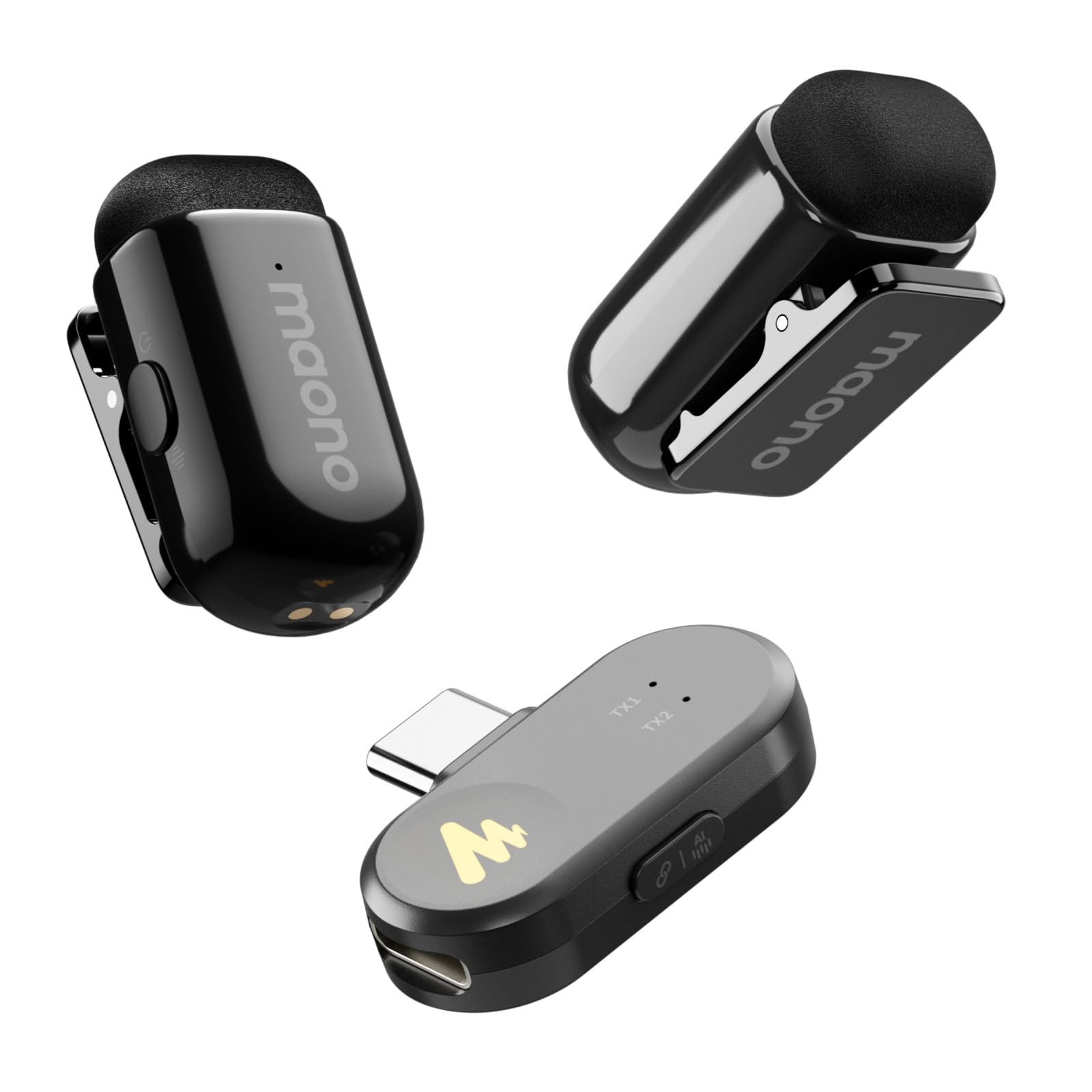
The MAONO Wave T1 Mini is a compact wireless lavalier built for phone video, interviews, streaming, and other creator work.
This maono lavalier microphone review looks at its adjustable noise reduction, app controls, stated range, and the setup details buyers should weigh.
MAONO Wave T1 Mini Review Summary
The quick verdict
1,000+ ratings
Read Amazon ReviewsMAONO Wave T1 Mini
A compact USB-C wireless lavalier for creators who want adjustable voice processing, phone-friendly recording, and charging while filming.
- The system uses 2.4GHz wireless connectivity and a USB Type-C receiver.
- The microphone supports 48kHz/16-bit audio, with a listed 20Hz–20kHz frequency range.
- Noise reduction has multiple levels, including a one-click control; the listed gain adjustment offers 16 levels across a 32dB range.
- The Maono Link app offers four voice filters and four voice effects, along with real-time noise reduction and gain adjustment.

Pros
- Compact clip-on format is suited to portable phone-video setups.
- App controls combine noise reduction, gain changes, EQ presets, and creative voice processing.
Consider before buying
- The transmitter’s stated working time of up to six hours may require planning for longer recording days.
- Some Android devices may need OTG enabled before pairing.
Read the full review summary
The Wave T1 Mini combines a USB-C receiver with a clip-on transmitter, app-based voice effects, and adjustable noise reduction.
Its small format and plug-and-play design make it appealing for creators who want a wearable mic without setting up a larger recording rig.
Its strongest fit is a solo creator recording to a compatible USB-C phone, tablet, or computer who values voice controls and the option to keep a device charging during a take.
Buyers should account for its up-to-six-hour stated working time, confirm device compatibility, and use the pairing indicators if setup does not complete.
The buying factors
MAONO Wave T1 Mini Scorecard
Editorial scores reflect listed features and buyer fit; they are not laboratory measurements or customer ratings.
Phone creator fit
The USB-C receiver and listed support for phones, tablets, and computers suit common mobile recording workflows, subject to device compatibility.
Audio control options
Noise reduction, gain adjustment, automatic limiting, EQ presets, and app voice effects provide several ways to shape a recording.
Wireless flexibility
The stated transmission range is generous for moving around during a shoot, though actual use depends on the recording environment.
Recording endurance
Up to six hours is useful for shorter sessions, and the receiver can accept charging while recording; the transmitter still has a stated operating limit.
Setup convenience
Plug-and-play use and status lights help, while Android OTG support and the pairing procedure may require attention on some setups.
Creative voice options
The companion app offers four voice filters and four voice-altering effects for users who want more than a straightforward mic signal.
Key Features and Specifications of MAONO Wave T1 Mini
- The system uses 2.4GHz wireless connectivity and a USB Type-C receiver.
- The microphone supports 48kHz/16-bit audio, with a listed 20Hz–20kHz frequency range.
- Noise reduction has multiple levels, including a one-click control; the listed gain adjustment offers 16 levels across a 32dB range.
- The Maono Link app offers four voice filters and four voice effects, along with real-time noise reduction and gain adjustment.
- The manufacturer lists a transmission range of up to 328 feet (100 meters), with an LED indicator for operating status.
- The transmitter and receiver support fast charging, with up to six hours of working time and a stated 1.5-hour charge time. The receiver can charge a connected device while recording.
- A long press operates pairing, and a double tap can remotely trigger photo capture or video recording. The listing also describes dual-channel recording and a mute function.
Pros and Cons of MAONO Wave T1 Mini
Pros
- Compact clip-on format is suited to portable phone-video setups.
- App controls combine noise reduction, gain changes, EQ presets, and creative voice processing.
- Receiver pass-through charging can help during longer phone recording sessions.
- The stated wireless range offers room to move around a filming space.
Consider before buying
- The transmitter’s stated working time of up to six hours may require planning for longer recording days.
- Some Android devices may need OTG enabled before pairing.
- Lightning-port devices require a compatible OTG USB-C-to-Lightning adapter, which is a separate setup consideration.
- A 16-bit recording specification may be less appealing to buyers prioritizing higher bit-depth capture.
Who Should Buy MAONO Wave T1 Mini?
Good fit
Consider the Wave T1 Mini if you make solo videos, interviews, or streams with a USB-C phone or computer and want more control than a basic clip-on mic offers.
Noise-reduction and gain adjustments give you options for adapting the input, while the app’s voice filters and effects support more stylized content.
It also makes sense when you film away from a desk and want to move around, or when a phone may need charging during a recording.
Check the receiver’s fit with your device, review whether Android OTG needs to be enabled, and plan around the transmitter’s stated battery life.
Before relying on remote camera controls or the app in a production workflow, confirm those functions work with your specific device and recording app.
The listed compatibility covers a range of phones, tablets, action cameras, and computers, but connection details can differ by setup.
Who should skip it
Look elsewhere if your recording sessions routinely exceed the transmitter’s stated six-hour maximum and you cannot pause to recharge or adjust your workflow.
This is not the most straightforward choice for a Lightning-only phone setup if you do not want to source and verify an OTG adapter. Buyers seeking higher-than-16-bit capture should also compare formats before choosing.
What the MAONO Wave T1 Mini Means for Phone Recording
Noise and gain controls for changing environments
The mic offers one-click noise reduction, multiple reduction levels, and 16-level gain adjustment across a stated 32dB range.
These controls give a creator room to adjust the input for different spaces, but they do not guarantee that background sound will disappear.
A quick recording in the intended location can help determine which settings preserve the voice naturally.
The receiver and phone workflow
A USB-C plug-in receiver keeps the setup centered on compatible mobile devices and computers. The product details also note that some Android phones may need OTG enabled, while Lightning devices need a suitable OTG adapter.
Verify the connection and record a short test before an important shoot, especially if your phone uses an adapter.
Range and battery as practical limits
The stated range reaches up to 328 feet, which can give a speaker room to move within a filming setup.
Wireless conditions affect real-world results, so treat that figure as a maximum rather than a promise for every location.
Up to six hours of working time suits many shorter sessions; receiver charging support can help keep a connected device powered, but does not remove the transmitter’s own battery limit.
Voice effects for deliberate production choices
The Maono Link app supplies four voice filters, four voice-altering effects, and real-time adjustment for gain and noise reduction.
That is useful for creators who want to experiment with a more shaped sound, while straightforward speech recording can use the mic without making effects the focus. The listed EQ presets add another option for tailoring the recording.
Alternatives to MAONO Wave T1 Mini
Battery-focused alternative
200+ ratings
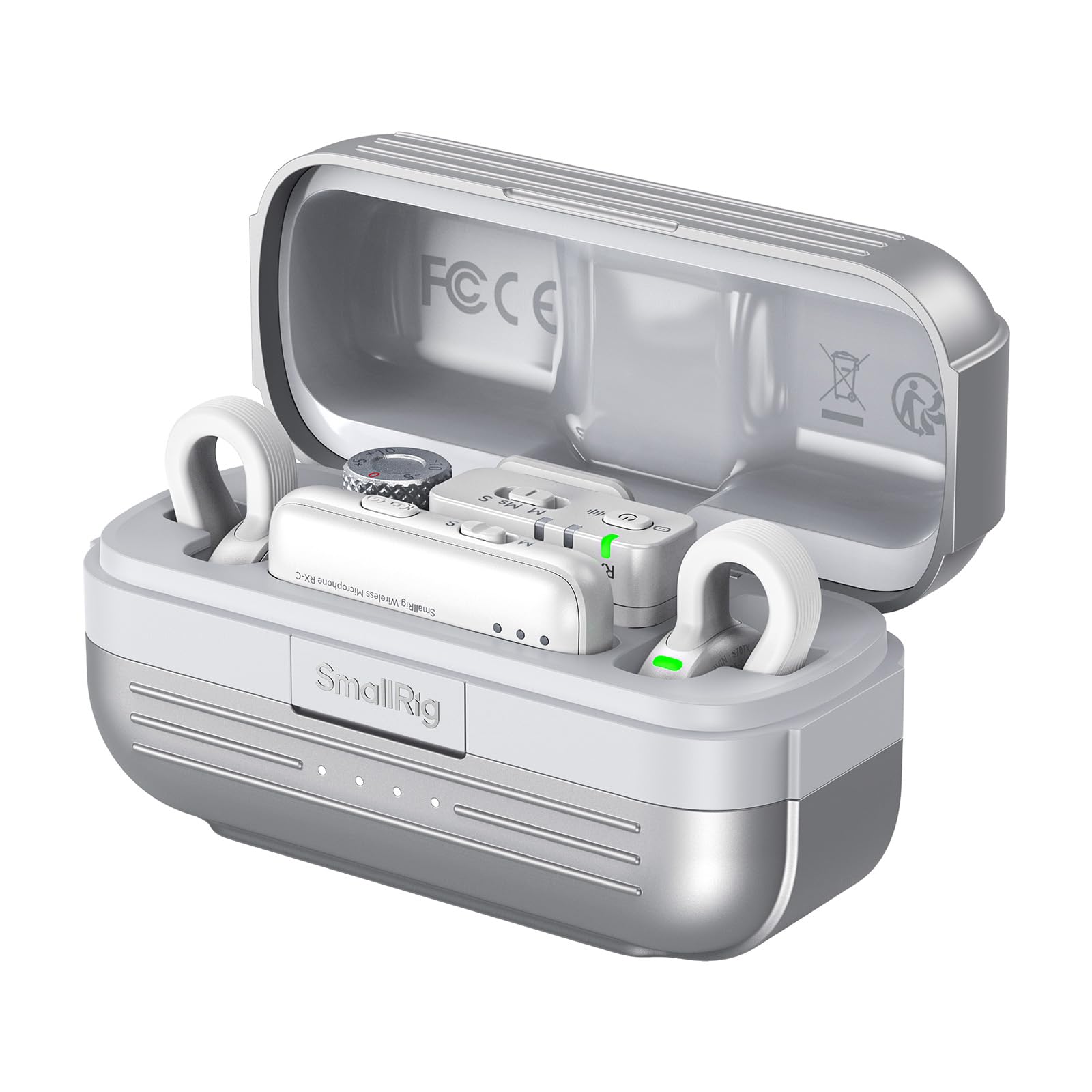
Read Amazon ReviewsSmallRig Wireless Mic S70
Choose the MAONO if a compact USB-C setup and its app effects suit your solo phone workflow.
Consider the SmallRig if you need a two-person kit, 3.5mm camera connection, charging case, or its higher listed recording bit depth; check its device-specific compatibility notes before buying.
- The SmallRig S70 includes two transmitters, two receivers, and a charging case.
- Its receiver offers USB-C and 3.5mm connections, and it lists up to eight hours per charge and over 40 hours with the case, along with 48kHz/24-bit recording and nine EQ presets.
- The MAONO Wave T1 Mini is a USB-C-focused system with up to six hours of stated use, app voice effects, adjustable noise reduction, and receiver charging while recording.
Battery-focused alternative
3,000+ ratings
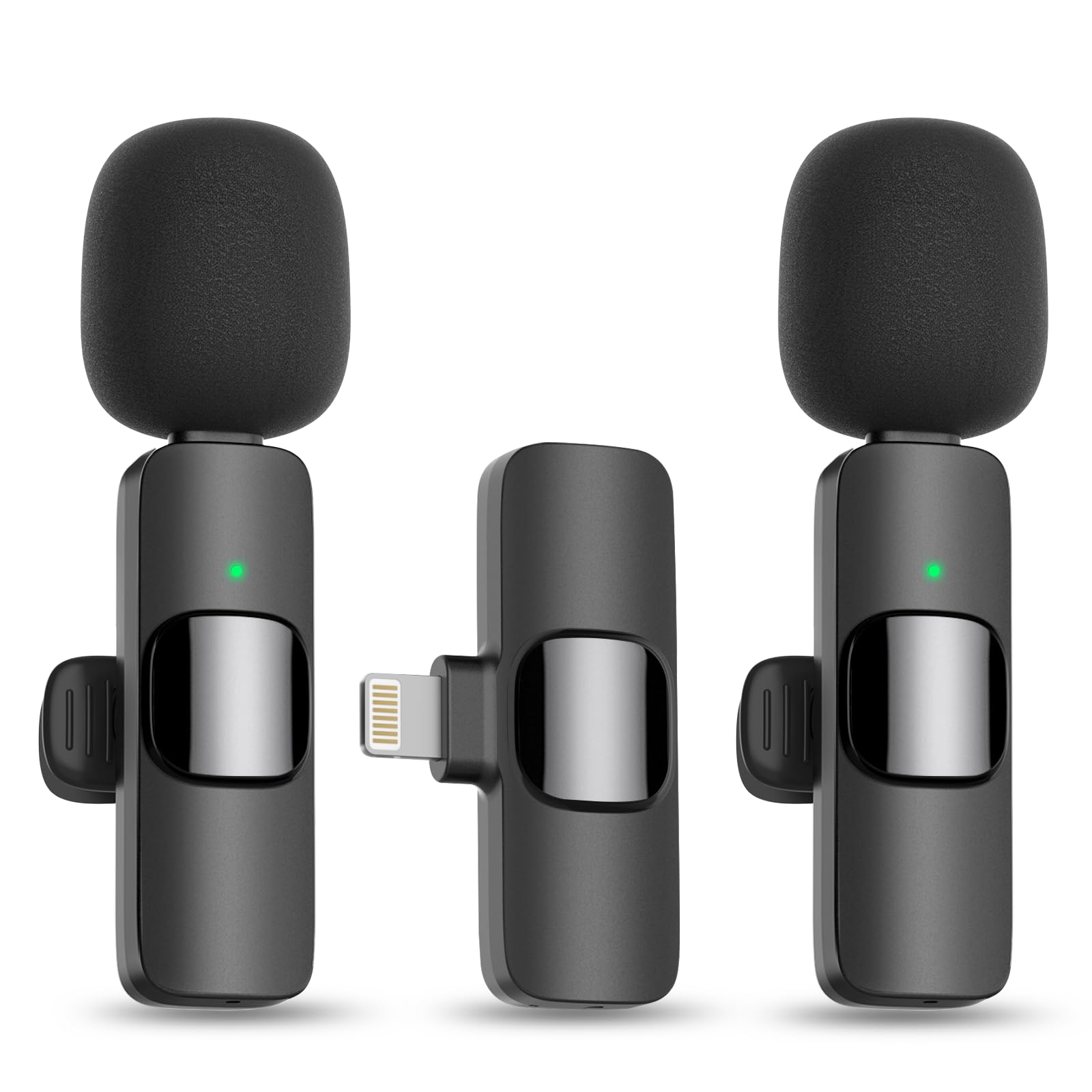
Read Amazon ReviewsMAYBESTA Wireless Mini Microphone (Lightning, Two Mics)
For a Lightning iPhone and two-person interviews, the MAYBESTA’s native Lightning connector and pair of mics may be a simpler fit.
The MAONO is the stronger match for compatible USB-C setups where app controls and its longer stated range matter more.
- The MAYBESTA kit is designed for Lightning-port phones and includes two microphones for recording two people.
- It lists up to 50–65 feet of transmission and approximately five to six hours of operation, and its setup instructions call for Bluetooth to be turned off on the phone.
- The MAONO uses a USB-C receiver and offers app-based controls, with a separate adapter needed for Lightning devices.
Is MAONO Wave T1 Mini Worth It?
The MAONO Wave T1 Mini is worth considering for creators who want a compact USB-C lavalier with adjustable sound controls, app-based voice effects, and the option to charge a connected device while recording.
Its stated range and plug-in receiver suit portable video workflows.
Buy it if your device is compatible and your sessions fit within the transmitter’s stated battery window. Check OTG or adapter requirements before filming, and compare recording format and multi-person needs if those determine your setup.
Your review at a glance
1,000+ ratings
Read Amazon ReviewsMAONO Wave T1 Mini
A compact USB-C wireless lavalier for creators who want adjustable voice processing, phone-friendly recording, and charging while filming.
- The system uses 2.4GHz wireless connectivity and a USB Type-C receiver.
- The microphone supports 48kHz/16-bit audio, with a listed 20Hz–20kHz frequency range.
- Noise reduction has multiple levels, including a one-click control; the listed gain adjustment offers 16 levels across a 32dB range.
- The Maono Link app offers four voice filters and four voice effects, along with real-time noise reduction and gain adjustment.